

WordPress and Guesty: The Connection That Kept Getting Rebuilt
Most accommodation operators I work with put real money into their own website. The brand matters as much as the money does. They are trying to stand out in a crowded market, and a true brand experience is how they do it. Whether they are utter luxury, corporate accommodation or a surf lodge on the coast, the photography, the copy, the SEO, the content, the email programme and the paid social are all doing the same job: pulling guests to their domain rather than to an OTA listing.
Once that traffic arrives, the operator wants a booking experience that feels like the rest of the site they just built. Guesty has a hosted booking engine and it works perfectly well. But it lives on a Guesty domain (or on a subdomain of your brand) and largely looks like a Guesty product. After all the work pulling the guest to your site, the booking journey hands them off to somewhere else at the moment they were closest to converting (let alone thinking about your marketing tracking).
For an operator who cares about brand continuity, that handoff is a real cost. That isn’t because Guesty's experience is necessarily bad, but because it isn't theirs. The marketing dollars that brought the guest in work less hard than they could when the conversion moment looks like a different product.
You can of course customise the hosted booking engine to a point. Guesty also offers a Professional Websites service that builds a more on-brand site around the booking engine. It is more flexible than the booking engine alone, but it is also restricted in what it allows, and it costs more than most operators want to spend on something they cannot fully control.
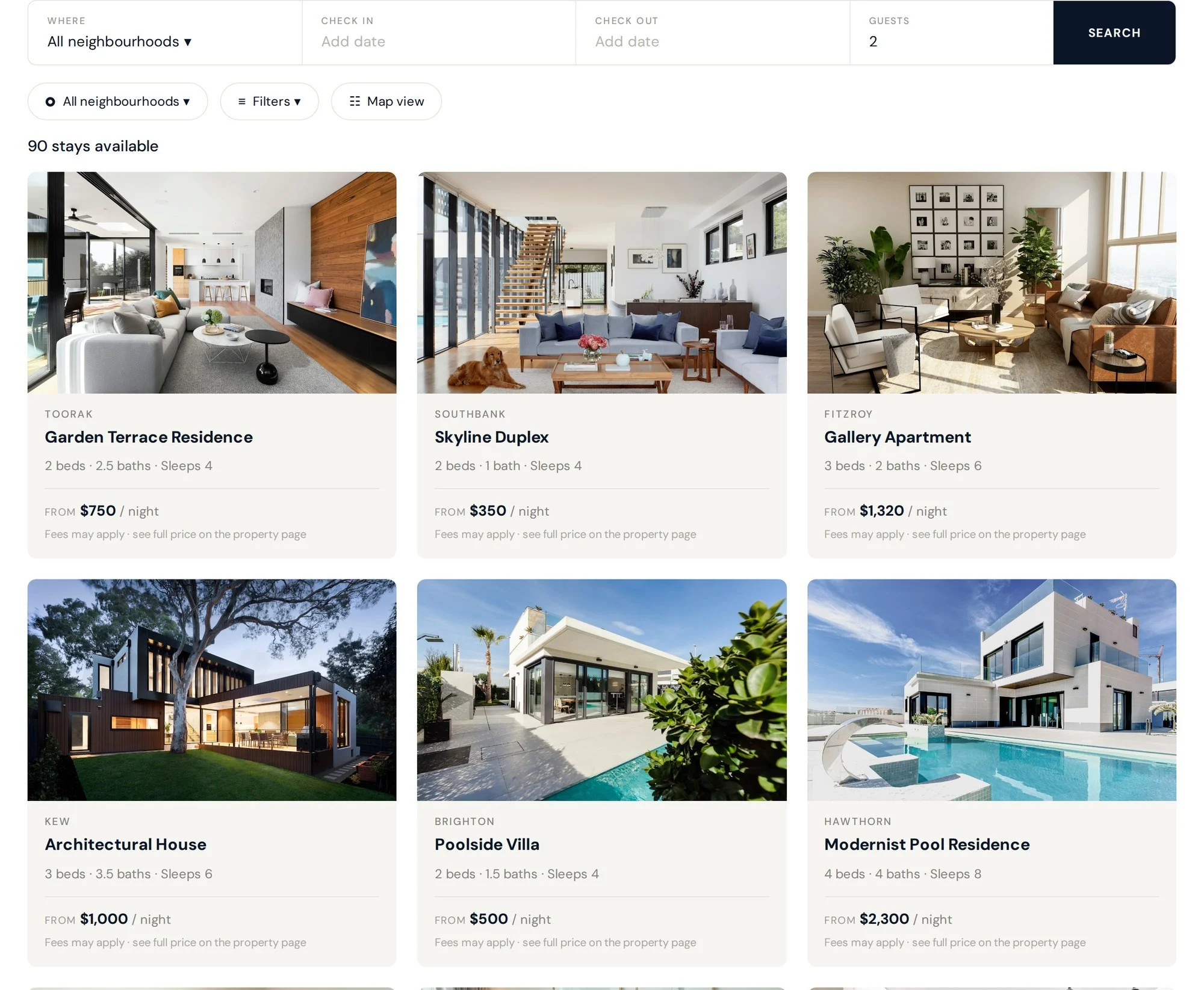
Most operators want the booking experience to live inside their own site, in their own design, with their own typography and tone, the same as the rest of the journey the guest has been on. The booking stays on their domain through the search grid, the property pages, the calendars and the quote. The handoff to Guesty only happens at the very last step, the payment page, where the security and the processor wiring genuinely belong on Guesty's side.
The way to get there has always been to hire a developer and build directly against the Guesty API. Guesty's API is more flexible than most of its competitors in the market, which is one of the platform's strengths. It is also complicated to work with. I have walked multiple web developers through the details of how this API works, each of them trying to figure out how to make it faster, quicker or easier in their own way.
Each operator who takes that route hires a developer for project, priced like the custom build it is. The result is functional, mostly. The harder cost is the one that arrives later. Guesty updates its API regularly, as a serious PMS should. Every update means each of those custom builds has to be updated too. Every unfortunately the operator ends up pays for those hours, every time.
I am in a stretch where I am helping a handful of operators through exactly these conversations. After the third or fourth now, I stopped watching politely and started writing.
What I built is a WordPress plugin that pulls listings, live availability and live pricing from the Guesty API into the operator's own WordPress site. The search grid, the property pages, the calendars and the quote panel all render inside the operator's own design. The handoff to Guesty's hosted checkout happens only at the very end, where it should.
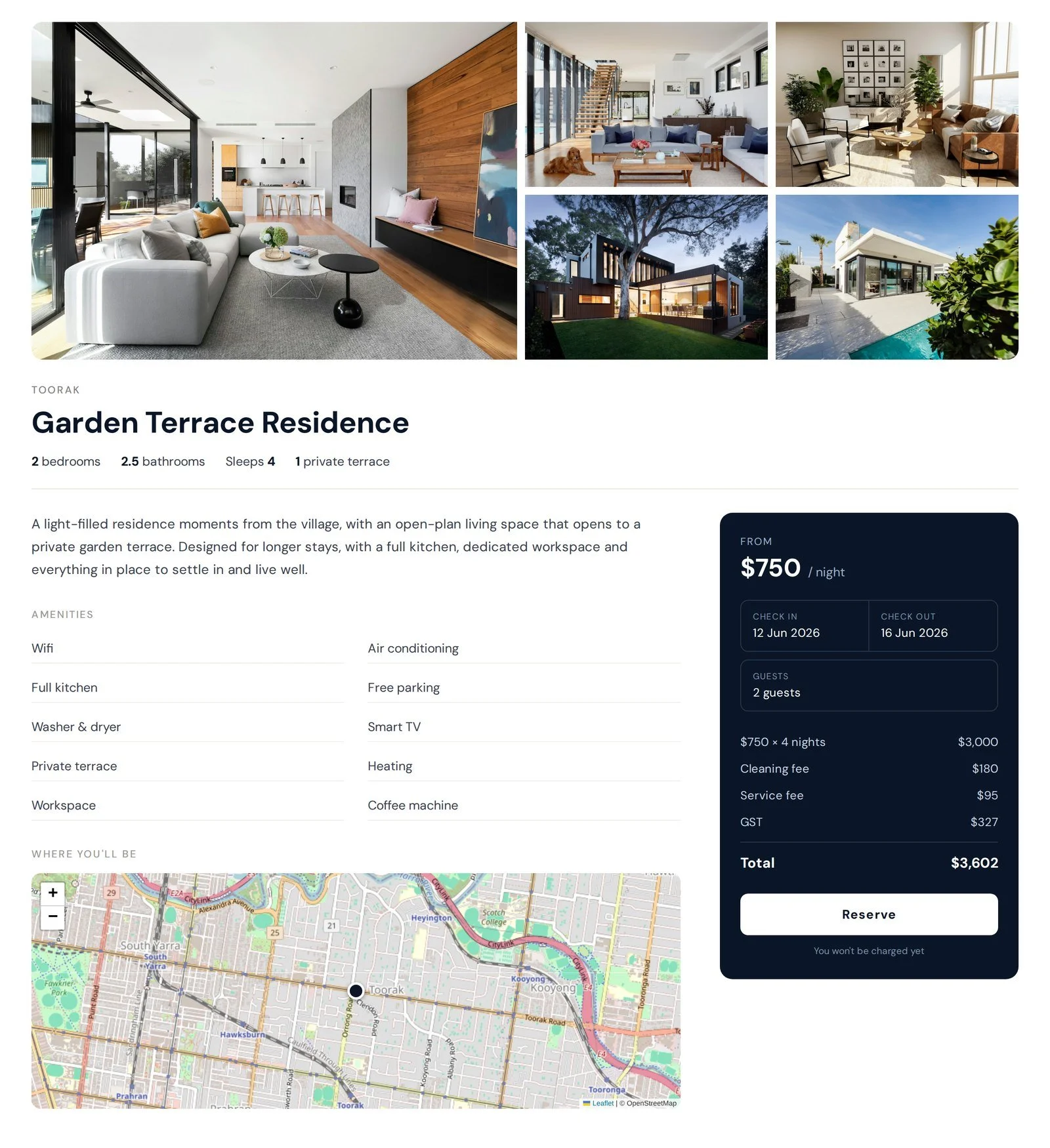
Example of what the completely un-styled WP plugin looks like. You can completely style it yourself once the data is there.
It inherits the host site's fonts and colours by default, so it looks like the rest of the site rather than a plugin dropped onto it. For operators with a developer in the picture, the markup, the styling and the shortcode placement are all open. Nothing is locked away in a black box.
That last part matters to me. I have been the operator on the receiving end of someone else's "platform" with the lid welded shut, and it is a horrible feeling. If an operator outgrows this plugin or decides to take it in a direction I have not anticipated, their developer can do that without my permission.
What I am most pleased about is the maintenance. When Guesty ships an API change, I update the plugin once. Every operator using it gets the fix in their next update.
The plugin is not a marketing site. It is the booking part of the site. The operator still needs the rest of their WordPress site to look like a place a guest would want to stay.
It also doesn’t create demand. The marketing work that pulls a guest to your site still has to be done elsewhere: the SEO, the PR, the repeat-guest programme and the loyalty incentives. The plugin helps that marketing investment convert better once a guest arrives, but it does not replace the work that brings them there. It does not handle the multi-property operator's portfolio reporting, the channel-mix dashboard or the revenue-management overlay. Those are different problems and bigger ones, and live elsewhere in the stack.
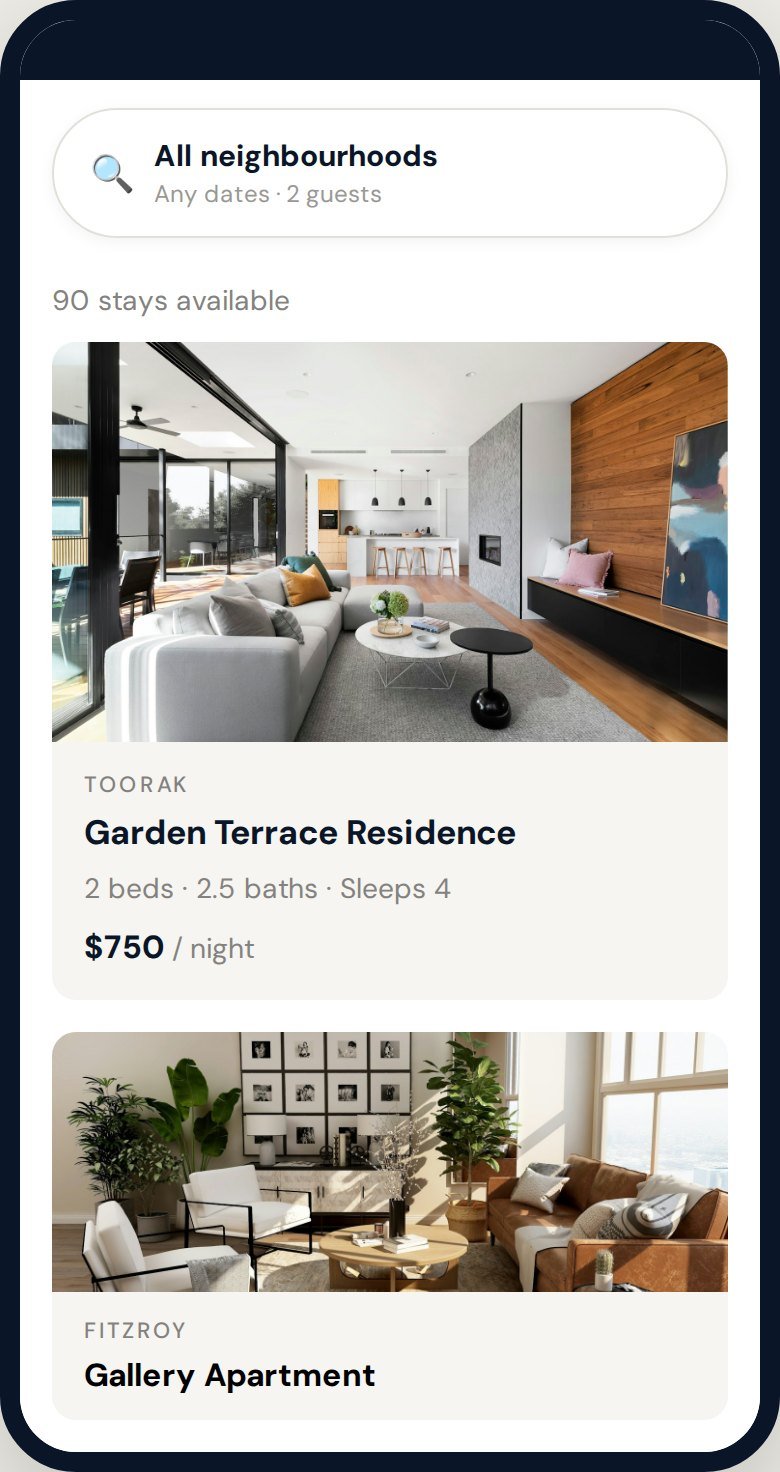
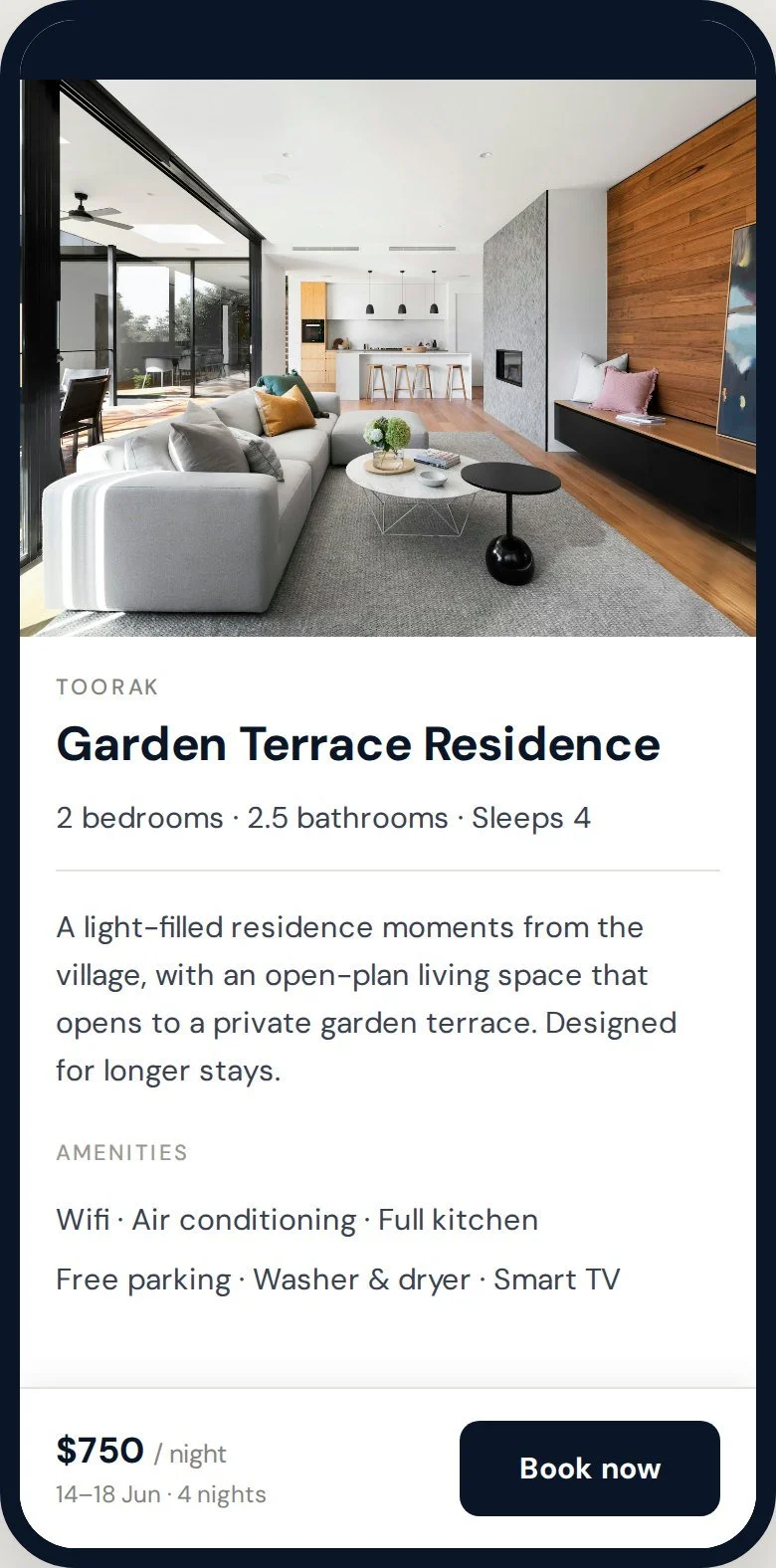
And it is not the only way to solve this. The hosted Guesty booking engine remains a perfectly reasonable choice for an operator who does not care about the handoff. There are also third-party booking widgets that do a similar job. I built this one because I wanted something that would feel like the operator's own site rather than a tool dropped into it, and because I wanted operators to keep control of what they were running.
Don't settle for the hosted booking engine. It is good, but however you update the colours, it still looks like a Guesty product, and it does not sit inside your content.
And don't let your developer rebuild the API integration from scratch. They will do it well, but every Guesty update means those custom builds need updating too. You pay for those hours every time, and Guesty ships updates regularly.
This suits operators who run Guesty, have a WordPress site, care about how the booking experience sits inside their brand and would otherwise be commissioning a custom build. If that is you, it is probably worth a look.
The plugin is in use with a small number of operators now. They have been generous with feedback, patient with the early-version friction and direct about what was missing. Almost everything good about the current version came from them. The plugin is better because of their willingness to use it while it was still rough.
If you are running Guesty and WordPress and any of this resonates, get in touch. Happy to walk you through it, or to say honestly that another option would suit you better. Either is a fine outcome.
